
Hyundai Sonata LF: Intake And Exhaust System / Turbo Charger Repair procedures
Hyundai Sonata LF 2014-2019 Service Manual / Engine Mechanical System / Intake And Exhaust System / Turbo Charger Repair procedures
| On-vehicle Inspection |
| Turbocharger Diagnostic Flow |
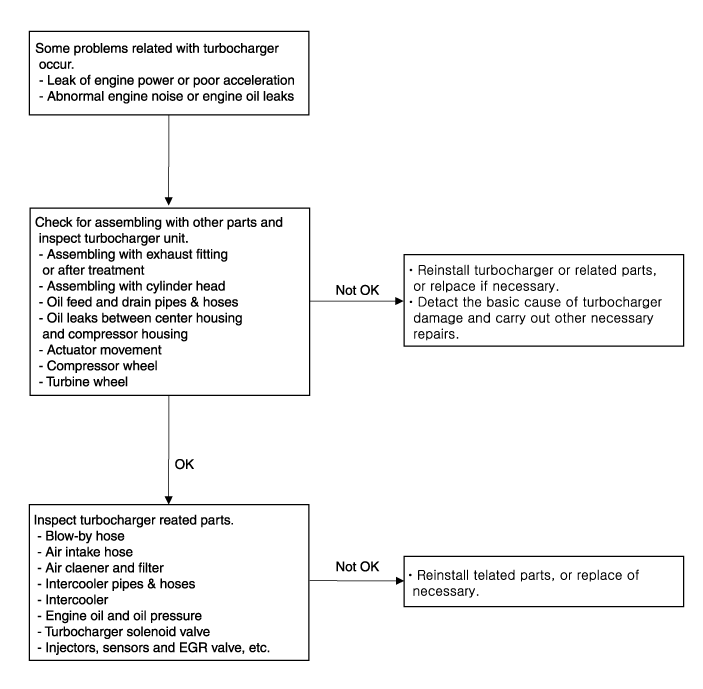
If any problem related with
turbocharger, such as lack of engine power, poor acceleration, abnormal
engine noise or oil leaks, may occur, check the turbocharger according
to the procedure as follows.
| 1. |
Check for assembling of the turbocharger and the exhaust fitting (or the after treatment).
If a gas leak occur as a gasket was not installed or mounting
bolts (or nuts) were tightened inadequately, it may cause abnormal
engine noise.
If the cause of the problem is detected, retighten the
mounting bolts (or nuts) as the specified torque or replace the gasket
or damaged parts with new ones if necessary. |
| 2. |
Check for assembling of the exhaust manifold and the cylinder head.
If a gas leak occur as a gasket was not installed or mounting
bolts (or nuts) were tightened inadequately, it may cause abnormal
engine noise.
If the cause of the problem is detected, retighten the
mounting bolts (or nuts) as the specified torque or install a new gasket
if necessary. |
| 3. |
Check the turbocharger oil feed pipe & hose and oil drain pipe & hose.
If a gas leak occur as a gasket was not installed or mounting bolts were tightened inadequately, it may cause oil leaks.
If the oil feed pipe & hose is damaged, engine oil is not
supplied sufficiently to the turbocharger then it may damage the
turbocharger. If the oil drain pipe & hose is damaged and clogged,
engine oil is not drained smoothly then it may cause oil leaks from the
turbocharger.
If the cause of the problem is detected, retighten the
mounting bolts (or nuts) as the specified torque or replace the gasket
or damaged parts with new ones if necessary. |
| 4. |
Check for oil leaks between center housing and compressor housing.
If the O-ring (gasket) between the center housing and the compressor housing is damaged, it may cause oil leaks.
If an oil leak is detected, replace the turbocharger with a new one. |
| 5. |
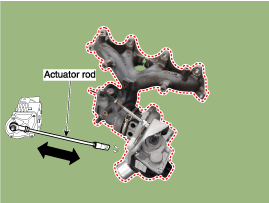
Check the turbocharger actuator.
If the turbocharger actuator is damaged, it may cause lack of engine power and poor acceleration.
If the actuator rod does not move, replace the turbocharger with a new one. |
| 6. |
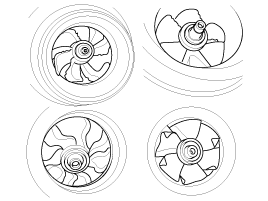
Check the turbocharger compressor wheel.
If the compressor wheel are damaged, it may cause abnormal noise from the turbocharger and poor acceleration.
If the compressor wheel are damaged or deformed, replace the turbocharger with new ones. |
| 7. |
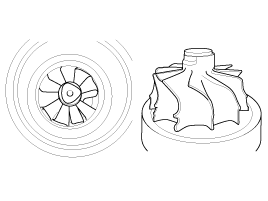
Check the turbocharger turbine wheel.
If the turbine wheel are damaged, it may cause abnormal noise from the turbocharger and poor acceleration.
If the turbine wheel are damaged or deformed, replace the turbocharger with new ones. |
If any problem is not detected in the turbocharger, check the turbocharger-related parts according to the procedure as follows.
| 1. |
Check the blow-by hose.
If the breather hose is bent or clogged, the internal
pressure in the engine increases then engine oil is not supplied
smoothly to the turbocharger. So it may cause damage of the turbocharger
and oil leaks.
If the cause of the problem is detected, replace the breather hose or the related parts with new ones. |
| 2. |
Check the air intake hose connected to the turbocharger.
If a cross-section of the hose diminishes as the air intake
hose is bent or crushed, intake air to the turbocharger reduces and the
pressure in front of turbocharger drops. So it may cause damage of the
turbocharger and oil leaks. If the air intake hose is detached or torn, a
foreign substance goes into the turbocharger and causes damage of it.
If the air intake hose is damaged, replace it with a new one. |
| 3. |
Check the air cleaner.
If the air cleaner filter is moistened or polluted
excessively or a non-genuine part is used, intake air to the
turbocharger reduces and the pressure in front of turbocharger drops. So
it may cause damage of the turbocharger and oil leaks. .
If the air cleaner filter is moistened or polluted excessively, replace it with a new one.
|

| 4. |
Check the intercooler hoses & pipes.
If the intercooler hoses & pipes are damaged or
disconnected, oil leaks may occur from the hoses & pipes and the
turbocharger may exceed the permissible speed then it may cause damage
of the turbocharger.
If the intercooler hoses & pipes are damaged, replace them with new ones.
|
| 5. |
Check the intercooler.
If the intercooler is damaged, the turbocharger may exceed the permissible speed then it may cause damage of the turbocharger.
If the intercooler is damaged, replace them with a new one.
|
| 6. |
Check the engine oil.
If the engine oil level is low, amount of engine oil fed to
turbocharger reduces then the bearings in the turbocharger may adhere
due to insufficient lubrication and cooling.
If the cause of the problem is detected, add or change engine oil.
|
| 7. |
Check the engine oil pressure.
If the engine oil level is low, amount of engine oil fed to
turbocharger reduces then the bearings in the turbocharger may adhere
due to insufficient lubrication and cooling.
If the cause of the problem is detected, add or change engine
oil. If foreign substances are accumulated on the oil screen, wash the
oil screen and replace the injector’s washer with a new one after
checking the injectors for gas leaks. Check the engine oil-related
parts, such as oil pump, if necessary.
|
| 8. |
Check the injectors, sensors, EGR valve, etc. (Refer to FL group)
If the injectors, sensors, EGR valve and etc. don’t work properly, it may cause lack of engine power.
If the cause of the problem is detected, replace the related parts with new ones. |
 Turbo Charger Components and Components Location
Components 1. Turbine housing2. Turbine inlet3. Turbine outlet4. Compressor housing5. Compressor inlet6. Compressor outlet7. Center housing8. Actuator9...

Other information:
Hyundai Sonata LF 2014-2019 Service Manual: Specifications
S..
Hyundai Sonata LF 2014-2019 Service Manual: Front Body Body Repair
Front Body A * These dimensions indicated in this figure are actual-measurement dimensions. [ Unit : mm (inch) ] Front Body B * These dimensions indicated in this figure are actual-measurement dimensions. [ Unit : mm (inch) ] Front Body C * These dimensions indicated in this figure are actual-measurement dimensions...
Categories
- Manuals Home
- Hyundai Sonata Owners Manual
- Hyundai Sonata Service Manual
- Transmission Gear Oil Repair procedures
- Components and Components Location
- Brake System
- New on site
- Most important about car

Copyright © 2026 www.hsonatalf.org