
Hyundai Sonata LF: Engine Control System / Purge Control Solenoid Valve (PCSV) Repair procedures
| Inspection |
| 1. |
Turn the ignition switch OFF. |
| 2. |
Disconnect the PCSV connector. |
| 3. |
Measure resistance between the PCSV terminals 1 and 2. |
| 4. |
Check that the resistance is within the specification.
|
| Removal |
| 1. |
Turn the ignition switch OFF and disconnect the battery negative (-) cable. |
| 2. |
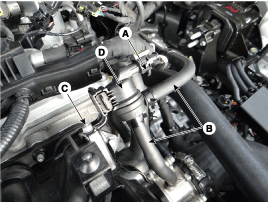
Disconnect the purge control solenoid valve connector (A). |
| 3. |
Disconnect the vapor hoses (B) from the purge control solenoid valve. |
| 4. |
Remove the installation bolt (C), and then remove the PCSV (D) from the engine.
|
| Installation |
|

|
| 1. |
Install in the reverse order of removal.
|

 CVVT Oil Control Valve (OCV) Description and Operation
Description Continuous Variable Valve Timing (CVVT) system advances or retards the valve timing of the intake and exhaust valve in accordance with the ECM control signal which is calculated by the engine speed and load...
Other information:
Hyundai Sonata LF 2014-2019 Service Manual: Description and Operation
Description The smart cruise control system allows a driver to program the vehicle to control the speed and following distance detecting the vehicle ahead without depressing the brake pedal and the accelerator pedal. 1. Cruise speed control: The vehicle maintains the selected speed if there are not vehicles ahead...
Hyundai Sonata LF 2014-2019 Service Manual: Repair procedures
Repair procedures ESP System bleeding This procedure should be followed to ensure adequate bleeding of air and filling of the ESC unit, brake lines and master cylinder with brake fluid. 1. Remove the reservoir cap and fill the brake reservoir with brake fluid...
Categories
- Manuals Home
- Hyundai Sonata Owners Manual
- Hyundai Sonata Service Manual
- Front Driveshaft Repair procedures
- Emission Control System
- Body Electrical System
- New on site
- Most important about car
