
Hyundai Sonata LF: Cylinder Head Assembly / Cylinder Head Cover Repair procedures
Hyundai Sonata LF 2014-2019 Service Manual / Engine Mechanical System / Cylinder Head Assembly / Cylinder Head Cover Repair procedures
| Removal |
| 1. |
Remove the engine cover. |
| 2. |
Disconnect the battery negative terminal. |
| 3. |
Remove the air clean hose.
(Refer to Intake and Exhaust System - "Ari Cleaner") |
| 4. |
Disconnect the engine wiring connector and haness clamp and then remove the cylinder head protector and wiring from engine.
|
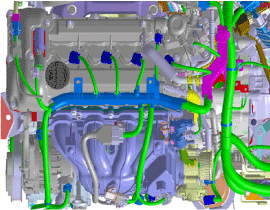
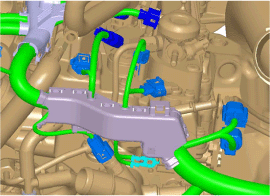
| 5. |
Disconnect the exhaust OCV (Oil Control Valve) connector.
(Refer to Fuel System - "CVVT Oil Control Valve") |
| 6. |
Disconnect the ignition coil.
(Refer to Engine Electrical System - "Ignition Coil") |
| 7. |
Remove the PCV (Positiv Crankcase Ventilation) hose(A).
|
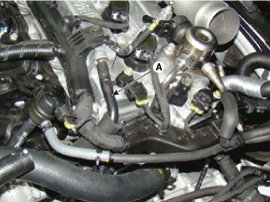
| 8. |
Remove the high pressure fuel pump.
(Refer to Fuel System - "High Pressure Fuel Pump") |
| 9. |
Remove the cylinder head cover (A), gasket (B).
|
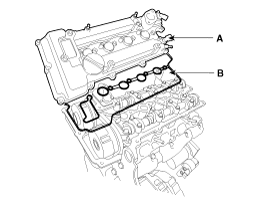

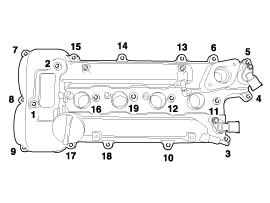
| Installation |
| 1. |
Install the cylinder head cover.
|
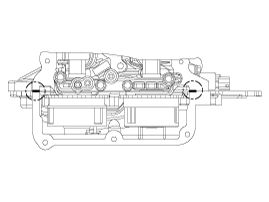

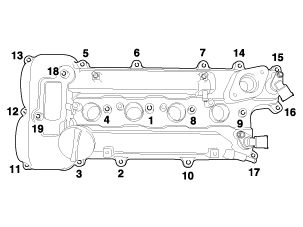
| 2. |
Install in the reverse order of removal. |


Other information:
Hyundai Sonata LF 2014-2019 Service Manual: Crankcase Emission Control System
Schematic Diagrams Schematic Diagram Repair procedures Inspection 1. After disconnecting the vapor hose from the PCV valve, remove the PCV valve. 2. Reconnect the PCV valve to the vapor hose. 3. Inspect the PCV vlave operation. (1) Run the engine at idle...
Hyundai Sonata LF 2014-2019 Service Manual: Front Door Inside Handle Repair procedures
Replacement 1. Remove the front door trim. (Refer to Front Door - "Front Door Trim") 2. After loosening the mounting screws, then remove the front door inside handle (A). 3. Install in the reverse order of removal. • Make sure the door locks/unlocks and opens / closes properly...
Categories
- Manuals Home
- Hyundai Sonata Owners Manual
- Hyundai Sonata Service Manual
- Brake System
- DCT (Dual Clutch Transmission) System
- Suspension System
- New on site
- Most important about car

Copyright © 2026 www.hsonatalf.org