
Hyundai Sonata LF: Fuel Delivery System / Fuel Line Repair procedures
| Removal |
Whenever the high pressure fuel pump, fuel pipe,
deliverypipe, or injector is removed immediately after shutting offthe
engine, an injury may be caused by the release ofhighly pressurized
fuel. Release the residual pressure inthe high pressure fuel line by
referring to the "Residualfuel pressure release procedure" before
removingany high pressure fuel system components.
|

| 1. |
Release the residual pressure in fuel line.
(Refer to the Fuel Delivery System - "Release Residual Pressure in Fuel Line") |
| 2. |
Turn the ignition switch OFF, and then remove battery (-) cable. |
| 3. |
Disconnect the fuel feed tube quick-connector (A).
|
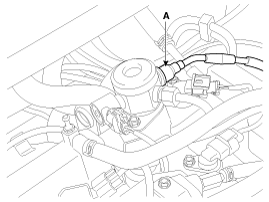

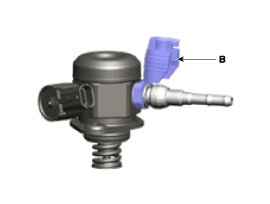

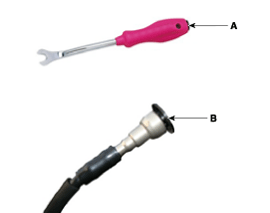
| 4. |
Disconnect the vapor hose (A) which is connected from the PCSV.
|
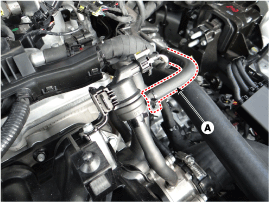
| 5. |
Lift the vehicle. |
| 6. |
Remove the fuel tank.
(Refer to Fuel Delivery System - " Fuel Tank") |
| 7. |
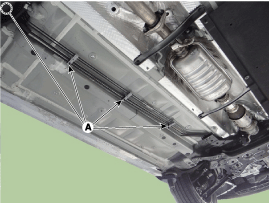
Open the vapor tube and fuel feed line fixing clip (A) to using driver.
|
| 8. |
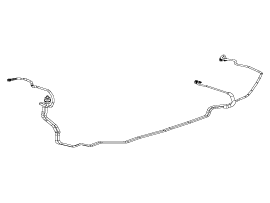
Remove the fuel line from the bottom of the vehicle.
|
| Installation |
| 1. |
Install in the reverse order of removal. |
 Fuel Pressure Sensor (FPS) Repair procedures
Inspection 1. Connect the GDS on the Data Link Connector (DLC). 2. Check the output voltage of fuel pressure sensor (FPS). Specification : Refer to “Specification� Removal 1...
 Filler-Neck Assembly Repair procedures
Removal 1. Turn the ignition seitch OFF and disconnect the battery negative (-) cable. 2. Open the fuel filler door and then remove the filler-neck installation screw (A)...
Other information:
Hyundai Sonata LF 2014-2019 Service Manual: Blower Motor Repair procedures
Inspection 1. Connect the battery voltage and check the blower motor rotation. 2. If the blower motor does not operate well, substitute with a known-good blower motor and check for proper operation. 3. Replace the blower motor if it is proved that there is a problem with it...
Hyundai Sonata LF 2014-2019 Service Manual: Repair procedures
Adjustment Inspect Glass Alignment 1. Inspect the alignment of the movable glass (C) that is between the front (A) and rear (B) glass and if needed adjust it. Alignment adjustment Standard value [mm(in.)] (1) Front edge : 0 mm (0 in.) (2) Rear edge : 0 mm (0 in...
Categories
- Manuals Home
- Hyundai Sonata Owners Manual
- Hyundai Sonata Service Manual
- Body (Interior and Exterior)
- Engine Mechanical System
- Cylinder Head Cover Repair procedures
- New on site
- Most important about car
