
Hyundai Sonata LF: Brake System / Brake Line Repair procedures
Hyundai Sonata LF 2014-2019 Service Manual / Brake System / Brake System / Brake Line Repair procedures
| Removal |
| 1. |
Disconnect the brake fiuid level switch connector, and remove the reservoir cap. |
| 2. |
Remove the brake fluid from the master cylinder reservior with a syringe.
|

| 3. |
Remove the wheel & tire. |
| 4. |
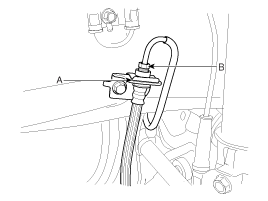
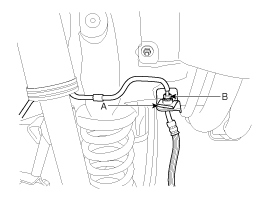
Disconnect the brake tube by loosening the tube flare nut (B).
Front
Rear
|
| 5. |
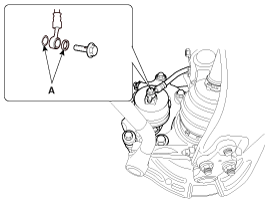
Remove the brake hose clip (A). |
| 6. |
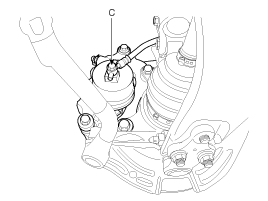
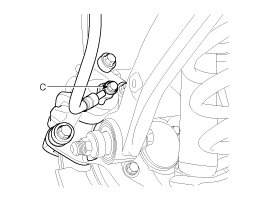
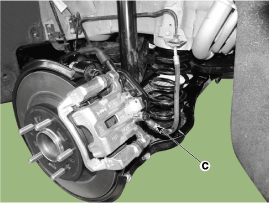
Disconnect the brake hose from the brake caliper by loosening the bolt (C).
[Front]
[General]
[EPB]
|
| Inspection |
| 1. |
Check the brake tubes for cracks, crimps and corrosion. |
| 2. |
Check the brake hoses for cracks, damage and fluid leakage. |
| 3. |
Check the brake tube flare nuts for damage and fluid leakage. |
| 4. |
Check brake hose mounting bracket for crack or deformation. |
| Installation |
| 1. |
Installation is the reverse of removal.
|
| 2. |
After installation, bleed the brake system.
(Refer to Brake System - "Brake System Bleeding")
(Refer to ABS - "ABS System Bleeding")
(Refer to ESP (Electronic Stability Program) System - "ESP System Bleeding") |
| 3. |
Check the spilled brake oil. |


Categories
- Manuals Home
- Hyundai Sonata Owners Manual
- Hyundai Sonata Service Manual
- Emission Control System
- Heating, Ventilation and Air Conditioning
- Repair procedures
- New on site
- Most important about car

Copyright В© 2026 www.hsonatalf.org