
Hyundai Sonata LF: Intake And Exhaust System / Intake Manifold Repair procedures
Hyundai Sonata LF 2014-2019 Service Manual / Engine Mechanical System / Intake And Exhaust System / Intake Manifold Repair procedures
| Removal and Installation |
| 1. |
Remove the engine cover. |
| 2. |
Disconnect the battery negative terminal. |
| 3. |
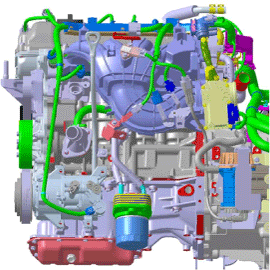
Disconnect the engine wiring connector and haness clamp and disconnect the wiring from intake manifold.
|
| 4. |
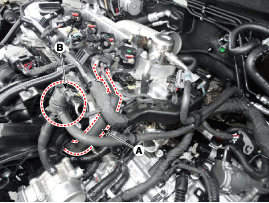
Disconnect the PCV (Positive crankcase ventilation) hose (A) and the PCSV (Purge control solenoid valve) (B).
|
| 5. |
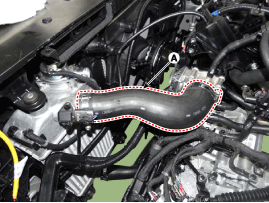
Remove the intercooler outlet hose (A).
|
| 6. |
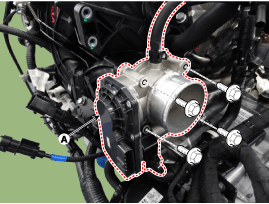
Remove the installation bolts, and then remove the ETC module (A) from the engine.
|
| 7. |
Disconnect the vacuum hose (A).
|
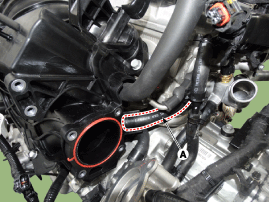
| 8. |
Remove the intake manifold (A) with the gasket.
|
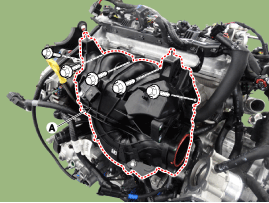

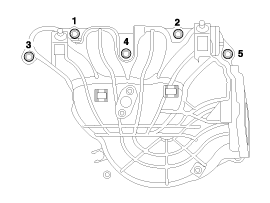
| 9. |
Install in the reverse order of removal. |

 Exhaust Manifold Components and Components Location
Components 1. Turbo manifold gasket2. Turbo manifold module3. Turbo charger coupler4. Turbo charger coupler & gasket5. Oil feed pipe & hose assembly6...
Categories
- Manuals Home
- Hyundai Sonata Owners Manual
- Hyundai Sonata Service Manual
- Repair procedures
- Suspension System
- Driveshaft and axle
- New on site
- Most important about car

Copyright В© 2026 www.hsonatalf.org